Wat Arun
The Temple of Dawn
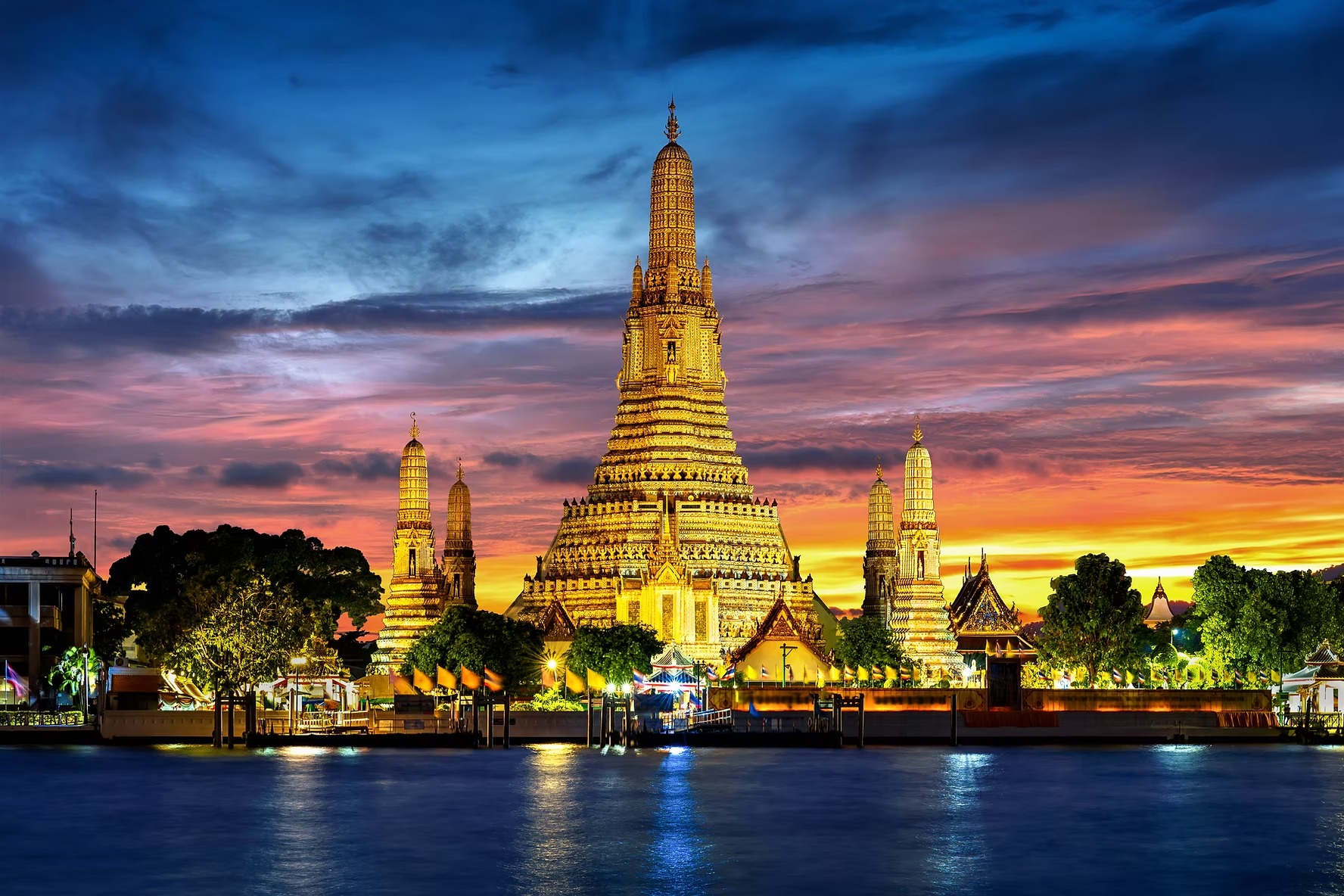
The Temple of Dawn is misnamed: it faces east, so the porcelain takes the light at the end of the day, from the water, once the ferries thin.
Where
Bangkok
Best time
Late afternoon into sunset, when the porcelain warms and the river quietens.
The prang is faced in broken Chinese porcelain — bowls and plates that arrived in Siam as ballast in the holds of trading junks, then were deliberately smashed and set into lime plaster as flowers. Stand close and the whole surface resolves into fragments of pattern: a rim here, half a chrysanthemum there.
It is called the Temple of Dawn, after Aruna, but the building faces east across the river, which means the sun rises behind it and sets on its face. The hour that flatters it is the last one, seen from the water or from the Bangkok bank opposite.
The temple is older than the city. It stood on the Thonburi side when Taksin made Thonburi his capital after the fall of Ayutthaya, and the Emerald Buddha rested here before it crossed the river to Wat Phra Kaew. The prang you see now was raised to its present height two reigns later.
Ballast, porcelain, and the men who set it
The mosaic is the reason to come close. Chinese ceramics travelled to Siam as cheap ballast, and when the ships unloaded, broken pieces were bought by the cartload and worked into the temple's surface — cups turned into petals, saucers into rosettes, whole plates set flat as medallions. Between them stand ranks of small figures, monkeys and demons with their arms raised, apparently holding the tiers of the prang up. A restoration completed in 2017 cleaned and repaired all of it, and left the prang paler than the photographs most people arrive with. Give it an hour of afternoon sun and the colour comes back.
Climbing the prang, and what you see from the terrace
Two flights of stone stairs climb the base of the central prang, and both are steep enough that you will want flat shoes and a free hand; they are considerably harder coming down than going up. Access to the upper levels varies with conservation work, so we check rather than promise. From the terrace you get the view the building was composed around: the river bending north, the roofs of Wat Pho and the Grand Palace on the far bank, and four satellite prangs at the corners below. The riverside terrace at the foot is the quieter place to sit, and it is where the light does most of its work.
The version of the temple that appears on the coin
After dark the prang is floodlit and becomes the fixed point of the whole river. From a table on the Bangkok bank, or from a boat drifting down with the current, you get the building as it appears on the ten-baht coin and in every painting sold along the Chao Phraya. The grounds close well before this, so the evening view is from outside — which is, in fairness, the view the architecture was designed for. We tend to pair the late-afternoon visit inside with dinner on the water afterwards, so the two readings of the same building happen an hour apart.
How We Visit
Our way in
We cross by private longtail from a landing on the Bangkok bank rather than queuing for the cross-river ferry at Tha Tien, which puts you at the temple steps and lets us choose the hour. Late afternoon is ours: the coach groups have gone, the light is on the face of the prang, and the river has quietened. Our guides are licensed historians rather than ticket-holders, and they will read the porcelain, the guardian figures and the ordination hall that most visitors walk straight past. Shoulders and knees covered, as at the palace.
Questions
What travellers ask
What is the best time of day to visit Wat Arun?
Late afternoon into sunset. The temple faces east, so the sun rises behind it and falls across its face at the end of the day, when the porcelain warms and the river traffic thins. Early morning is cool and quiet but photographically flat from the Bangkok bank. After dark the prang is floodlit and best seen from the water rather than from inside the grounds.
Can you climb Wat Arun?
Yes. Two steep stone stairways climb the base of the central prang to the terraces, though access to the upper levels is sometimes restricted for conservation work. The steps are narrow and much harder to descend than to climb, so flat shoes and a free hand for the rail make the difference. From the terrace the view takes in the river bend and the Grand Palace on the opposite bank.
How do you get to Wat Arun from the Grand Palace?
By water. Wat Arun stands on the Thonburi bank, directly across the Chao Phraya from Wat Pho and the Grand Palace, and the crossing takes only a few minutes. Public cross-river ferries run from Tha Tien pier. We use a private longtail instead, which avoids the queue, lands you at the temple’s own steps and lets us arrive at the hour we have chosen.
Journeys That Include This
Ask about Wat Arun
It sits inside a journey we already run, and it fits just as easily into one written from scratch around your dates.
Nearby